






You can’t verify that 7-OH products contain what’s needed for safe use because no federal quality control standards exist. Independent testing shows potency levels ranging 109-509% higher than labeled amounts, with some pressed pills containing 15 mg per unit, impossible through natural extraction. Without FDA-approved formulations or mandated dose limits, you’re facing unpredictable concentrations that make traditional kratom dosing guidelines irrelevant. Understanding the full scope of these regulatory gaps reveals why consumer safety remains compromised.
Understanding 7-OH Concentration Levels in Commercial Products
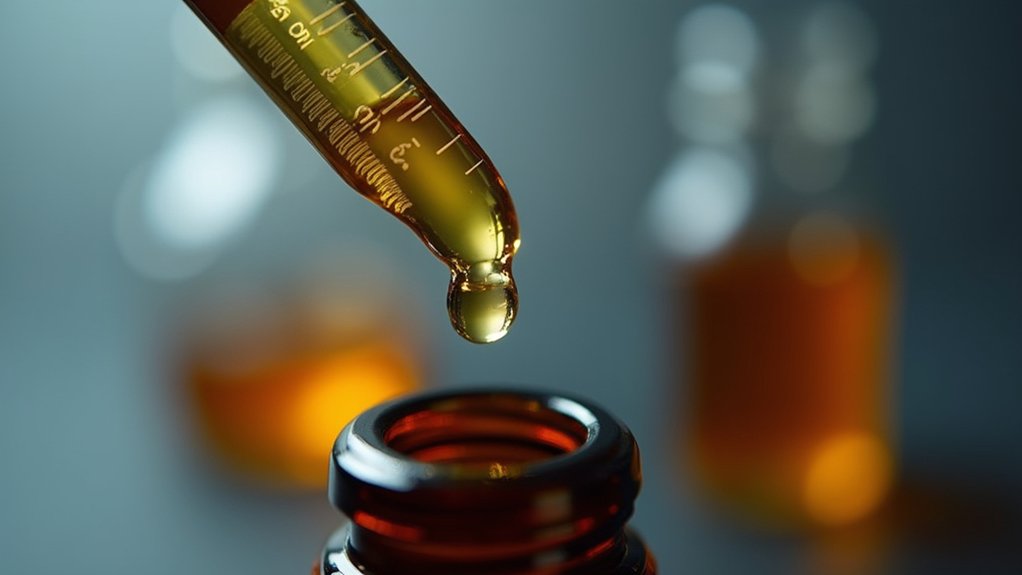
However, you’ll find commercial products tell a different story. Seven of eight tested products contained 7-OH levels 109-509% higher than natural amounts, revealing significant product contamination risks. Capsule formulations showed concentrations of 93.0-593.2 ng/mg, while liquid drinks measured 1.96-2.51 ng/μL.
Current adulteration testing standards remain insufficient. Without verified concentration labeling, you can’t determine actual 7-OH content before consumption. Some pressed pills contain 15 mg of 7-OH per unit, concentrations impossible through botanical extraction alone. This gap creates measurable overdose risk. The FDA recently issued seven warning letters to companies illegally marketing products containing added or enhanced levels of 7-hydroxymitragynine. These unknown concentration levels become especially dangerous because combining 7-OH with alcohol, prescription drugs, or illicit substances can dangerously slow breathing and cause death. Because kratom is classified as a dietary supplement, these products lack the quality control oversight that would ensure accurate labeling and safe concentration levels.
Current Regulatory Status and FDA Oversight Gaps
While commercial 7-OH products flood gas stations, convenience stores, and online retailers, no FDA-approved 7-OH drugs currently exist on the market. You’re purchasing substances that lack federally mandated dose limits, quality control measures, and accurate potency labeling. The FDA issued warning letters to seven companies in June 2025, but this reactive enforcement doesn’t establish preventive regulatory frameworks. The agency has emphasized that 7-OH binds to opioid receptors, which underlies their concern about its potential for abuse.
Your consumer risk awareness matters because products often contain heightened 7-OH concentrations without standardized labeling. You can’t determine safe dosages from packaging that misrepresents concentrated derivatives as natural kratom. Products like fruit flavored gummies and ice cream cones containing 7-OH are particularly concerning because they are appealing to children and teenagers.
Legal compliance obligations vary dramatically across jurisdictions. Seven states ban kratom entirely, while California municipalities enforce independent restrictions. The FDA recommended Schedule I classification in July 2025, but 7-OH remains legally available during DEA deliberations, leaving you traversing an unregulated marketplace. The CDPH issued guidance on October 24, 2025, advising that food and supplements containing kratom or 7-OH are illegal in California.
Pharmacological Potency Compared to Traditional Kratom
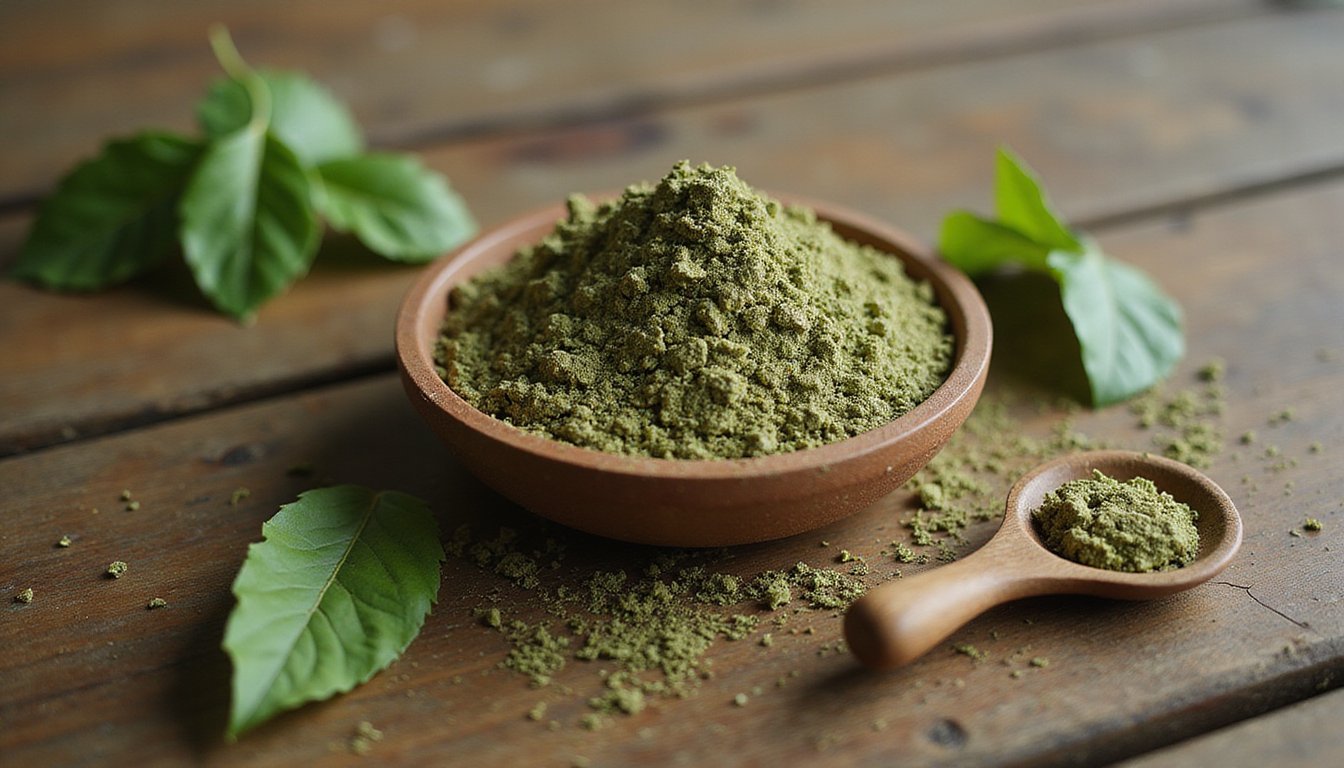
When comparing potency, you’ll find that 7-OH demonstrates 7-13 times greater binding strength than morphine at opioid receptors, making precise dosing critical for safe use. Natural kratom leaves contain only 0.01-0.04% 7-OH by dry weight, while concentrated commercial extracts can reach up to 98% purity, representing an exponential increase in pharmacological intensity. This dramatic difference in concentration means the dosage protocols you’d use for traditional kratom powder don’t translate safely to 7-OH products. The body quickly adapts to 7-OH, requiring increasingly higher doses over time to achieve the same effects. The FDA has recognized these dangers and is actively working to restrict the sale of 7-OH and push for its scheduling under the Controlled Substances Act.
7-Oh Vs Morphine Strength
The pharmacological potency of 7-hydroxymitragynine vastly exceeds that of morphine, with research demonstrating 7-13 times greater strength in receptor binding studies. Understanding 7 OH potency classification helps you recognize why precise dosing matters for safety.
In-vitro guinea pig ileum preparations confirm 7-OH exhibits 13-fold higher potency than morphine and 40-fold greater strength than mitragynine. This 7 OH dosage sensitivity demands careful attention.
Key potency comparisons you should know:
- 7-OH binds mu-opioid receptors with substantially increased affinity compared to morphine
- Both compounds display naloxone-sensitive antinociceptive activity
- 7-OH functions as a low-efficacy but high-potency agonist
- Morphine demonstrates moderate efficacy binding versus 7-OH’s direct, strong receptor interaction
These distinctions directly impact respiratory depression risk and appropriate dosing protocols. The FDA has announced steps to restrict access to 7-OH due to its strong opioid-like effects. Research shows that high doses of 7-hydroxymitragynine elevated reward thresholds in ICSS studies, suggesting potential aversive effects at elevated concentrations.
Natural Vs Concentrated Levels
Comparing 7-OH’s potency to morphine establishes why the compound’s concentration level determines its safety profile. In raw kratom leaf, 7-hydroxymitragynine comprises less than 2% of the alkaloid fraction, while mitragynine accounts for approximately two-thirds. This natural metabolite formation occurs when your liver processes mitragynine through cytochrome P450 3A enzymes.
Concentrated extracts tell a different story. Commercial 7-OH products exceed raw kratom’s potency by up to 500%, with refined forms reaching 98% purity. You’re consuming a compound 13 times stronger than morphine in isolated form versus balanced alkaloid profiles found in traditional preparations. This partial agonist at μ-opioid receptors also acts as a competitive antagonist at δ- and κ-opioid receptors, creating a complex pharmacological profile. Beyond opioid receptors, 7-OH also affects dopamine, serotonin, and adrenergic receptors, contributing to its multifaceted effects.
Whole kratom maintains milder effects lasting 2-6 hours. Concentrated 7-OH produces unpredictable, intensified, longer-lasting responses. The presence of mitragynine and other alkaloids in natural preparations may mitigate dependency risks that isolated extracts amplify. Research suggests that mitragynine and related compounds may function as atypical opioid agonists, potentially providing therapeutic effects with fewer negative side effects than conventional opioids.
Quality Control Challenges in the Unregulated Market
When you purchase 7-OH products from retail locations, you’re encountering a market without standardized testing protocols to verify what’s actually in each product. Concentration levels vary dramatically between manufacturers and even between batches from the same company, with some products containing 7-OH levels up to 500% higher than what occurs naturally in kratom. This inconsistency makes accurate dosing impossible, since you can’t reliably calculate intake when potency fluctuates unpredictably across the unregulated market. The unknown concentrations of 7-OH in these unregulated products significantly increase the risk of unintentional overdose. Products labeled as “kratom extract” or “enhanced kratom” can contain synthetic 7-OH at levels up to 98%, far exceeding anything found in the natural plant. Adding to these concerns, there is no test to measure how much 7-OH is in the body, existing tests can only show whether 7-OH was present, making it nearly impossible to determine safe consumption levels.
No Standardized Testing Protocols
Different laboratories testing 7-OH products employ varying reagents, solutions, and analytical techniques, creating considerable discrepancies in how alkaloid content gets measured and reported. Testing protocol variability means you can’t reliably compare results across brands or batches. Methods range from HPLC to NMR to UPLC, each yielding potentially different dosage readings.
Accreditation standard gaps compound this problem. Consider these critical issues:
- Not all facilities hold ISO/IEC 17025 certification, the gold standard for laboratory competence
- Labs aren’t required to disclose their credentials or quality assurance protocols
- Heavy metal and microbial detection thresholds vary greatly between facilities
- Mycotoxin testing lacks standardized action limits, letting labs set arbitrary safety benchmarks
Without universal protocols, you can’t establish meaningful safety benchmarks or trust that reported dosages reflect actual product content.
Inconsistent Concentration Levels
Although testing protocols create one layer of uncertainty, inconsistent concentration levels across 7-OH products pose an even more direct threat to dosage accuracy. You’ll find 7-OH content ranging from below 0.005% to 2.8% across commercial products, a variance exceeding 500% compared to natural kratom leaves.
| Product Type | 7-OH Concentration Range |
|---|---|
| Natural Leaves | 0.005%, 0.21% |
| Commercial Products | 109%, 520% above natural |
Without supply chain transparency, you can’t verify whether manufacturers artificially elevate 7-OH through semi-synthetic processes using PIFA catalysts. Adulterant identification becomes nearly impossible when pressed pills contain 15 mg of 7-OH per unit, concentrations never found in botanical preparations.
Commercial capsules show mitragynine levels between 9.7, 19.0 μg/mg, while liquid drinks range from 190.7, 396.4 ng/μL, demonstrating formulation-dependent inconsistencies that directly impact your dosing precision.
Drug Interaction Risks and Combination Dangers
Several dangerous drug interactions occur when 7-OH combines with alcohol, sedatives, or other central nervous system depressants. You face compounded opioid effects that amplify toxicity beyond single-agent exposure. Since 7-OH binds to opioid receptors three times stronger than morphine, even following dosage recommendations won’t protect you when mixing substances.
Critical interaction dangers you should know:
- Alcohol co-ingestion causes severe respiratory depression linked to fatal overdoses in adults aged 18-40
- Sedatives create respiratory depression risk comparable to morphine toxicity
- Medications produce additive opioid effects exceeding safe thresholds
- Unknown product concentrations make interaction severity unpredictable
Without standardized storage guidelines or regulated potency testing, you can’t accurately gauge safe limits. Naloxone can reverse an overdose, but prevention requires avoiding all substance combinations.
Dosage Variability and Consumer Safety Concerns
Beyond drug interactions, the inconsistent potency of 7-OH products presents its own significant risk factor. You’ll find tablets ranging from 5mg to 30mg per unit, while drinks contain 5-10mg per serving. This wide disparity makes establishing appropriate dosage strategies challenging without transparent labeling.
If you’re new to 7-OH, start with 2.5-5mg to assess your tolerance. Common protocols suggest 1-2mg initially, with lower body weight individuals beginning at 0.5mg. Don’t exceed 20mg daily, and wait at least four hours between doses.
The long term safety implications remain unclear since isolated 7-OH hasn’t undergone human clinical trials. Missouri’s poison center data shows exposures nearly doubled from 2024 to 2025, underscoring why you should verify third-party lab testing before purchasing any product.
Frequently Asked Questions
Can Naloxone Reverse a 7-Oh Overdose if Emergency Responders Are Called?
Naloxone effectiveness against 7-OH overdoses remains theoretically supported but clinically unconfirmed. Since 7-OH acts as a partial mu-opioid agonist, naloxone should displace it from receptors, reversing respiratory depression. However, you’ll need to follow overdose precautions carefully, call 911 immediately, as naloxone’s 30-90 minute duration may require additional doses. Emergency responders can administer continuous infusions if needed. Limited human data exists specifically for 7-OH, so professional medical monitoring remains essential.
How Long Do 7-Oh Withdrawal Symptoms Typically Last After Stopping Use?
Your typical withdrawal duration depends on your dosage history and usage patterns. You’ll experience peak severity of symptoms within 24-72 hours after your last dose, with acute physical effects subsiding within 3-7 days. However, you may encounter post-acute withdrawal syndrome (PAWS), where psychological symptoms like anxiety, cravings, and mood instability persist for weeks to months. Heavy, prolonged use correlates with extended withdrawal timelines compared to occasional consumption.
Are There Any States That Have Banned 7-Oh Products Specifically?
Yes, several states have banned 7-OH products specifically. You’ll find complete bans in Florida, Louisiana, Mississippi, Colorado, and California, where product regulations now classify 7-OH as a controlled substance. Additionally, Orange County and cities like San Diego and Newport Beach have local prohibitions. These consumer safety guidelines emerged after documented overdoses and deaths linked to concentrated 7-OH formulations. Texas has reported serious illnesses but hasn’t implemented a statewide ban yet.
What Should I Tell Doctors if I’ve Been Using 7-Oh Products?
You should disclose the specific brand names, dosage amounts, and frequency of your 7-OH consumption to consult qualified medical professionals effectively. Tell your doctor about the product forms you’ve used, tablets, gummies, or shots, since formulation affects absorption. List all concurrent substances, including alcohol and medications. Describe any adverse symptoms you’ve experienced and their timing. This information helps providers discuss health risks and develop appropriate treatment protocols for your situation.
Do 7-Oh Products Show up on Standard Workplace Drug Tests?
No, 7-OH products won’t appear on standard 5-panel, 10-panel, or 12-panel workplace drug tests. These screenings check for THC, cocaine, amphetamines, opiates, and benzodiazepines, not kratom alkaloids. However, you should review your employer’s workplace policies carefully, as some industries require specialized testing. Product legality varies by jurisdiction, and certain regulated fields like healthcare or transportation may specifically screen for kratom using advanced LC-MS/MS methods.