




An addiction recovery group is a voluntary community where you’ll connect with others who share your goal of overcoming substance or behavioral addictions. These groups range from spiritual twelve-step programs like Alcoholics Anonymous to evidence-based options like SMART Recovery. You’ll find peer support, reduced isolation, and practical tools for maintaining sobriety. To find the right fit, consider whether you prefer faith-based approaches, secular methods, or harm reduction strategies, understanding these differences helps you choose wisely.
Definition and Purpose of Addiction Recovery Groups
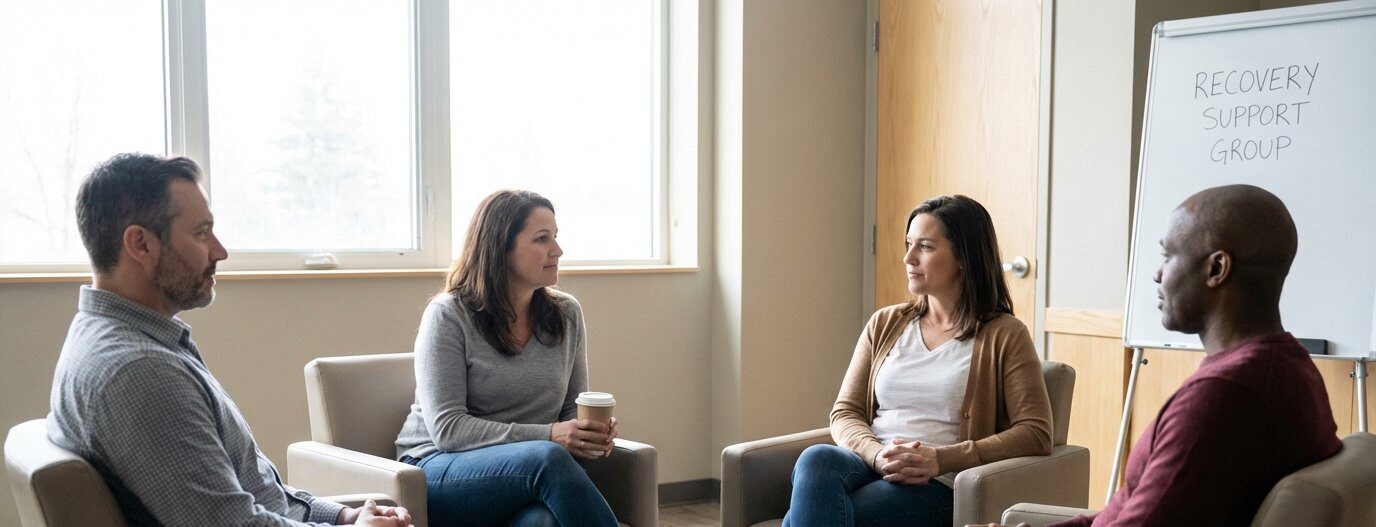
When you’re struggling with addiction, finding a community that understands your experience can make a profound difference in your recovery journey. Addiction recovery groups are voluntary associations where individuals share a common goal: overcoming substance or behavioral addictions through mutual support.
These organizations exist across a spectrum, from secular programs to spiritually-focused approaches. Some advocate complete abstinence while others support harm reduction strategies. Through peer integration dynamics, you’ll connect with others facing similar challenges in safe, nonjudgmental environments.
The primary purposes include expanding your awareness of addiction’s consequences, motivating you toward recovery readiness, and reducing isolation. Group culture building creates supportive social networks that help prevent relapse. Participants also develop or relearn social skills necessary for sober interactions with others. Members work together to identify triggers and develop healthy coping mechanisms that reduce the risk of relapse. Research shows that active involvement in these communities correlates with higher chances of maintaining long-term sobriety. Studies indicate that any therapy increases positive outcomes for patients with substance use disorders, making participation in recovery groups a valuable component of treatment.
Major Types of Recovery Support Groups
Although all recovery support groups share the common goal of helping individuals overcome addiction, they differ greatly in philosophy, structure, and approach.
Finding the right recovery support group means matching your personal beliefs and preferences with the right philosophy and approach.
Twelve-Step Programs
You’ll find twelve-step programs like Alcoholics Anonymous and Narcotics Anonymous most widely available. These groups emphasize spiritual recovery support through sponsorship and applying twelve principles to daily life.
Secular Alternatives
If you prefer non twelve step groups, SMART Recovery offers evidence-based, cognitive-behavioral approaches across 3,200 weekly meetings worldwide. Women for Sobriety and Secular Organizations for Sobriety provide additional self-empowerment options. These secular programs focus on self-empowerment and underlying addiction issues rather than spiritual principles.
Faith-Based Groups
Programs like Celebrate Recovery integrate Bible-based teachings, while options exist for Jewish, Buddhist, Muslim, and Catholic communities.
Family Support
You don’t have to be struggling with addiction yourself. Al-Anon, Alateen, and Nar-Anon help loved ones develop coping skills and find community. These groups combat feelings of loneliness while providing encouragement through shared experiences.
Clinical Group Therapy Models for Addiction Treatment

When you enter clinical treatment for addiction, you’ll likely encounter several evidence-based group therapy models designed to support your recovery. Psychoeducational groups help you understand addiction as a disease and how substances have affected your life, while cognitive-behavioral therapy groups teach you to identify triggers and develop healthier thinking patterns. Skills development groups then give you practical tools for managing stress, preventing relapse, and building the interpersonal abilities you’ll need for lasting sobriety.
Psychoeducational Group Approaches
Psychoeducational group approaches serve as a foundational component of addiction treatment, combining structured learning with peer support to help participants understand the science behind substance use disorders. You’ll learn about brain chemistry, withdrawal symptoms, and why addiction functions as a chronic condition requiring ongoing management.
These groups incorporate trauma informed approaches while teaching practical skills like trigger identification, stress management, and relapse prevention. Through personalized treatment planning, you’ll develop coping strategies tailored to your specific needs and circumstances. This model is particularly suitable for individuals early in treatment who are just beginning to understand their diagnosis and need foundational knowledge.
SAMHSA endorses psychoeducational groups as an effective model for substance abuse treatment. You’ll gain mental health literacy addressing co-occurring conditions such as anxiety and depression. The structured format reduces isolation by connecting you with peers facing similar challenges, fostering recovery through shared experiences in a nonjudgmental environment. Family members can also participate in psychoeducational sessions to learn how to reduce enabling behaviors and provide appropriate support throughout your recovery journey.
Cognitive-Behavioral Therapy Groups
Cognitive-behavioral therapy groups represent one of the most rigorously studied clinical approaches for treating substance use disorders, offering you structured methods to identify and change the thought patterns driving addictive behaviors.
In these sessions, you’ll learn to recognize automatic negative thoughts like “I can’t survive without alcohol” and reshape them into constructive alternatives. The peer based dynamics strengthen this process, when you hear others challenge similar thinking patterns, it reinforces your own cognitive restructuring efforts.
CBT groups teach practical coping strategies including deep breathing, journaling, and trigger identification. You’ll develop relapse prevention plans addressing real-world challenges. Research shows CBT produces small to moderate effect sizes compared to inactive treatment, with effects strongest at early follow-up periods of one to six months. Strong clinical recommendations support its use.
Group cohesion enhances outcomes as participants validate each other’s progress and share accountability for maintaining healthier thought patterns. CBT also adapts effectively to co-occurring mental health disorders, allowing treatment to address both addiction and underlying conditions like anxiety or depression simultaneously.
Skills and Relapse Prevention
Beyond understanding your thought patterns, lasting recovery requires building concrete skills you can apply when cravings hit or high-risk situations arise. Skills development groups focus specifically on teaching practical coping mechanisms essential for abstinence maintenance throughout your recovery journey.
In these groups, you’ll work on specific areas where many people struggle, social competence, anger management, and communication patterns. The group setting provides a safe space where you can practice new behaviors before applying them in real-world situations.
A critical component involves learning to recognize relapse warning signs before they escalate. You’ll develop awareness of behaviors, thoughts, and circumstances that historically preceded substance use. By identifying these patterns early, you can implement prevention strategies proactively rather than reactively. These concrete tools become your foundation for sustained recovery beyond treatment.
Key Characteristics and Structure of Recovery Groups

When you’re exploring recovery groups, you’ll find that sessions typically run 60 to 90 minutes and meet weekly, giving you consistent structure without overwhelming your schedule. Unlike clinical therapy, these groups follow a peer-led model where members, not professionals, chair meetings and guide discussions. This approach puts you in an environment where leadership comes from people who’ve walked similar paths, creating authentic connections built on shared experience. Groups are typically kept small with 6-10 participants, allowing for deeper connections and more individualized attention during each session. These groups are usually free, anonymous, and easily accessible, making them a sustainable option throughout your long-term recovery journey.
Session Length and Frequency
The structure and timing of addiction recovery group sessions play a pivotal role in treatment outcomes, with research showing that consistent attendance directly correlates with long-term success.
Understanding session frequency and session structure helps you maximize your recovery journey:
- Residential programs typically offer multiple daily group sessions lasting 60-90 minutes each
- Intensive outpatient groups meet three times weekly, often for three-hour sessions
- Standard outpatient sessions run approximately 90 minutes on a regular schedule
- Check-in periods consume 5-20 minutes at the start of each meeting
- Sessions conclude with brief individualized planning for goals until your next meeting
Research demonstrates that attending six or more self-help group sessions correlates with setting meaningful treatment goals. Your commitment to regular attendance increases your likelihood of staying in treatment beyond 90 days, which nearly doubles one-year recovery rates. Studies show that patients in treatment for only 7-20 days achieved just 24.1% recovery rates at the one-year mark, highlighting why extended participation matters. Group therapy is offered by over 90% of SUD treatment facilities, making it the most accessible format for those seeking consistent support in their recovery journey. Additionally, being connected to resources like a primary care provider and the supplemental nutrition assistance program can enhance your likelihood of engaging in beneficial recovery activities such as self-help group attendance.
Group Leadership Models
While session structure and timing create the framework for recovery groups, leadership style determines how effectively that framework supports your healing.
Different leadership models serve distinct purposes in recovery. Cognitive-behavioral leaders take a directive approach, guiding you through structured interventions that target specific thought patterns. Support group leaders adopt a less directive style, emphasizing connection-building and shared experiences among members. Interpersonal process leaders adjust their activity level based on your group’s developmental stage, modeling empathic communication throughout sessions.
Regardless of approach, essential group leadership qualities remain consistent. Effective facilitators demonstrate authenticity, empathy, and non-judgmental engagement. They work collaboratively with resistance rather than against it. Strong group facilitation techniques include active listening, positive reinforcement, and maintaining emotional safety. These qualities create environments where you can explore recovery openly.
How to Identify and Select the Right Recovery Group for You
Selecting the right recovery group requires honest self-assessment and careful consideration of your unique circumstances. A thorough client needs evaluation helps determine which setting matches your current recovery stage and interpersonal capabilities.
Consider these key factors when choosing your group:
- Your commitment level to abstinence and recovery goals
- Previous experiences in group settings and comfort with sharing
- Cultural background and whether specialized populations meet your needs
- Ability to honor group agreements and manage impulses
- Whether you’d benefit more from educational, skills-based, or process-focused groups
Group composition analysis matters considerably. You might thrive in homogeneous groups with peers sharing similar experiences or heterogeneous groups offering diverse perspectives. Remember, your needs will evolve, reassess your group fit regularly as you progress through recovery stages.
Benefits and Effectiveness of Group-Based Recovery
Once you’ve found a group that fits your needs, you’ll likely start experiencing measurable benefits that research consistently supports. Group participation addresses key social determinants of recovery while delivering significant mental health benefits through peer connection and shared experience.
| Benefit | Research Finding |
|---|---|
| Relapse reduction | 7% to 25% lower relapse rates |
| Treatment completion | 90% reaching 2 years stay substance-free to 10 years |
| Self-efficacy | 85% report improved personal value |
| Criminal recidivism | Up to 42% reduction in violent reconviction |
| Sustained recovery | High involvement predicts lower substance use at 12 months |
You’ll find that active participation, having a home group, sponsor, and weekly attendance, predicts the strongest outcomes. These aren’t just statistics; they’re pathways that countless individuals have walked successfully before you.
Taking the First Step Toward Finding Your Recovery Community
Taking the first step toward recovery often feels overwhelming, but understanding what to expect can ease your anxiety about reaching out. Overcoming intimidation starts with knowing that most programs begin with a one-hour nursing assessment to determine your specific needs and appropriate care level.
When accessing community support, you’ll typically encounter these initial steps:
- Complete an intake assessment with a nursing professional
- Receive an individualized treatment plan based on your history
- Get matched to the right care level, outpatient, intensive outpatient, or residential
- Connect with trained facilitators who monitor your progress
- Access referrals to higher care levels if medically necessary
You don’t need to have everything figured out before reaching out. Recovery communities exist specifically to meet you where you are and guide you forward.
Frequently Asked Questions
How Much Do Addiction Recovery Group Sessions Typically Cost?
The average cost for addiction recovery group sessions varies widely based on the program type. You’ll typically pay $50 to $200 per day for standard outpatient services, while intensive outpatient programs average around $225 per session. Many facilities offer flexible payment options, including sliding scale fees and insurance coverage. Don’t let cost concerns stop you from seeking help, most treatment centers work with you to find affordable solutions that fit your financial situation.
Can Family Members Attend Recovery Group Meetings With Me?
Yes, family members can often attend recovery group meetings with you. Research shows that family involvement positively impacts both your recovery and your loved ones’ wellbeing. Many programs welcome group participation from family members through dedicated sessions, while organizations like Al-Anon and Nar-Anon specifically support families. You’ll want to check with your specific group about their policies, as some meetings are open to families while others remain closed.
What Happens if I Relapse While Attending a Recovery Group?
If you relapse while attending a recovery group, you’ll find group support during relapse rather than judgment. Members understand that setbacks are common, 40-60% of people experience them early in recovery. Your group will help you identify triggers and strengthen relapse prevention strategies. Most groups encourage honesty about struggles, viewing relapse as an opportunity to learn and adjust your approach. Staying connected to your group actually improves your chances of getting back on track quickly.
Are Online Addiction Recovery Groups as Effective as In-Person Meetings?
Research shows in-person meetings typically produce better outcomes, you’re about twice as likely to maintain abstinence compared to online-only attendance. Virtual attendance challenges include reduced social engagement and difficulty forming accountability partnerships that strengthen recovery. However, online groups offer valuable accessibility benefits, and attending both formats achieves results comparable to in-person only. What matters most is your consistent participation and building meaningful connections, regardless of which format works best for your situation.
How Long Should I Continue Attending Recovery Group Sessions?
You should attend recovery group sessions for as long as they support your sobriety, there’s no universal timeline. Research shows people follow different paths: some maintain consistent commitment with about 50 meetings annually, while others gradually reduce attendance over time. What matters most is your ongoing progress monitoring. Studies indicate that higher severity and female gender predict longer attendance. Listen to your needs, and don’t hesitate to adjust your participation as your recovery evolves.