



Art therapy can genuinely transform your addiction recovery journey by giving you a nonverbal outlet to process overwhelming emotions and confront traumatic experiences at your own pace. When you create art, your brain’s reward centers activate, helping rewire pathways linked to stress and impulse control. Research shows art-making can reduce cortisol levels by up to 75%, building healthier coping mechanisms. Below, you’ll discover exactly how creative expression supports each stage of your recovery.
How Art Therapy Supports Emotional Processing and Self-Awareness
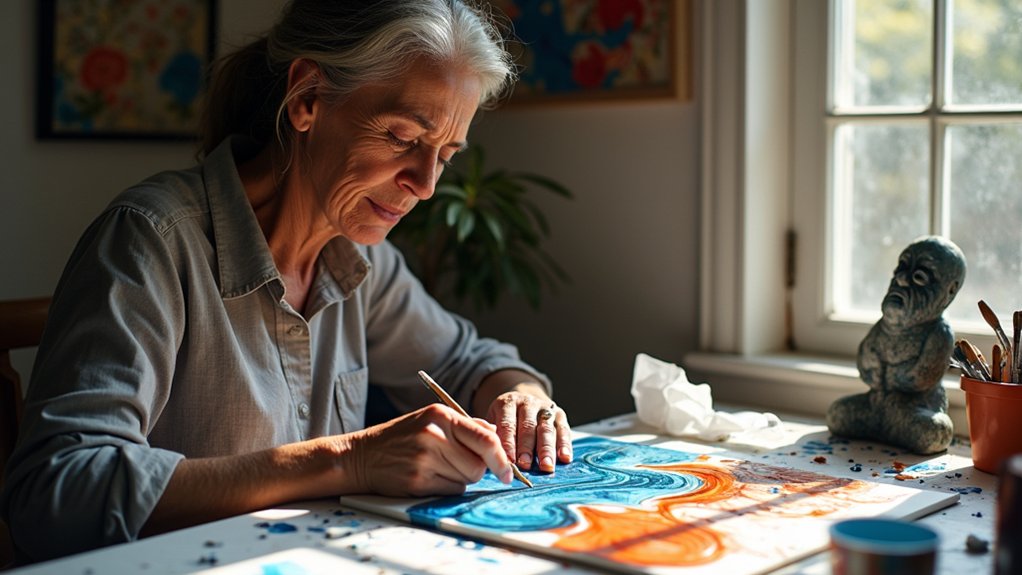
When words fail to capture the weight of what you’re carrying, art offers another way forward. Through collages, sketches, and mask-making, you can externalize emotions that feel impossible to verbalize. The symbolic meaning of artwork allows you to confront traumatic experiences gradually, at your own pace, without the pressure of traditional talk therapy.
The therapeutic benefits of mindful art making extend beyond surface-level expression. As you create, you activate thought processes and uncover memories that reveal deeper reasons behind your cravings. This nonjudgmental exploration helps identify triggers you might not otherwise recognize. The creative process engages reward centers in the brain, rewiring pathways linked to stress and impulse control. Research has shown that art therapy produces large effect sizes for reduced depressive symptoms in participants who complete structured interventions. The drawing process can induce an alpha state that facilitates recall of implicit memory, helping surface experiences stored deep within your brain. By visually representing your inner landscape, you reduce shame and gain essential self-awareness, transforming abstract feelings into tangible insights that support lasting recovery.
The Science Behind Delay Discounting and Better Decision-Making
Every choice you make in recovery involves weighing immediate gratification against future wellbeing, and science has identified a specific mechanism that explains why this feels so difficult.
Science has identified exactly why choosing future wellbeing over immediate gratification feels like such a battle in recovery.
Delay discounting measures how quickly you devalue future rewards. Research confirms this process influences both addiction development and recovery outcomes. The neural correlates of delay discounting reveal why cravings feel so powerful, your brain literally assigns less worth to tomorrow’s benefits.
Here’s what the science shows:
- Higher discounting rates predict greater relapse risk at six-month follow-ups
- Drug use and withdrawal both increase discounting rates
- Delay discounting and impulse control directly shape your recovery trajectory
- Your discounting patterns can improve during treatment
Understanding this mechanism empowers you to recognize when immediate impulses override your deeper values. Research shows that elevated delay discounting is related to substance abuse and money mismanagement, two problematic behaviors that frequently co-occur. Studies also demonstrate that IQ scores negatively correlate with delay discounting rates, suggesting cognitive skills play a protective role in decision-making. Psychoeducation on delayed discounting helps patients focus on future rewards and overcome the challenge of prioritizing immediate gratification.
Current Adoption Rates in Substance Abuse Treatment Programs
How widely has art therapy actually penetrated the addiction treatment landscape? Currently, approximately 36.8% of substance use treatment programs offer art therapy services, with NIAAA-funded research confirming similar rates of 38.6% across 307 facilities.
Despite ongoing funding challenges with Medicaid reimbursement, adoption rates remain steady. You’ll find art therapy frequently paired with Motivational Enhancement Therapy and 12-Step programs, creating holistic recovery approaches. Recent research from the University of Kansas suggests that art-delivered episodic future thinking shows promise in reducing delay discounting among women in residential treatment.
The demographic impact on implementation is striking. Programs serving higher proportions of women show increased art therapy integration, while adolescent-focused facilities actually prefer music therapy. Women’s residential treatment centers have embraced art therapy as a primary intervention. These programs often combine art therapy with evidence-based treatments like CBT and DBT, using artwork to uncover emotional triggers before applying cognitive tools for coping skill development.
This landscape reveals art therapy’s growing acceptance, not as a replacement for traditional methods, but as a complementary modality that addresses emotional dimensions conventional approaches sometimes miss. Systematic reviews have demonstrated that art therapy produces significant therapeutic outcomes for vulnerable populations, including those struggling with addiction alongside conditions like depression and PTSD.
Building Relapse Prevention Skills Through Creative Expression
The most compelling evidence for art therapy’s role in relapse prevention lies in its measurable impact on stress, the single greatest threat to lasting recovery. When you spend just 45 minutes creating art, your cortisol levels can drop by up to 75%, offering significant stress reduction benefits that protect your sobriety. This therapeutic approach is now found in approximately thirty-seven percent of all treatment programs nationwide.
Just 45 minutes of creating art can reduce cortisol levels by up to 75%, offering powerful protection for your sobriety.
Art therapy builds healthy coping mechanisms through four key pathways:
- Trigger identification, Creating collages or sketching reveals emotional patterns that previously drove substance use
- Emotional rewiring, Art engages your brain’s reward centers, satisfying cravings through creative accomplishment
- Flow states, Creative immersion temporarily silences anxiety and outside concerns
- Emotional release, Drawing and painting help you process trapped guilt without words
These skills become your toolkit for managing recovery’s challenges. Programs like “Colorful Life” demonstrate how expressive arts interventions can effectively enhance well-being and self-efficacy among those affected by addiction, including both individuals in recovery and their family members.
Art Therapy Applications During Detoxification and Clinical Settings
While these coping skills serve you throughout recovery, they become especially powerful during detoxification, often the most physically and emotionally demanding phase of treatment.
When withdrawal symptoms make verbal communication difficult, art provides a nonverbal outlet for expressing what words can’t capture. You’ll find that creative self concept development begins here, as you discover new ways to process overwhelming emotions through color, texture, and form.
Clinical settings integrate art therapy strategically during detox to alleviate stress and anxiety while measuring your progress through engagement levels with materials. This therapeutic relationship building between you and your art therapist creates safety during vulnerable moments. Sessions may incorporate various techniques including painting, drawing, sculpting, collage, and making music to help you process difficult emotions.
Approximately 36.8% of substance abuse treatment programs now offer art therapy, recognizing its power to provide hope when you need it most.
Frequently Asked Questions
How Long Does a Typical Art Therapy Session Last During Addiction Treatment?
A typical art therapy session during addiction treatment lasts between 60 to 90 minutes. This session duration gives you enough time to immerse yourself in the creative process, express your emotions through art, and reflect on what you’ve created. Whether you’re in individual or group art therapy, this timeframe allows you to explore your feelings fully while connecting with your inner healing journey and processing meaningful insights.
Do I Need Artistic Talent to Benefit From Art Therapy?
You don’t need any artistic talent to benefit from art therapy. The magic happens through creative expression itself, not the final product. Your therapist guides you through personal exploration using colors, textures, and shapes as tools for healing, not perfection. Whether you’re drawing stick figures or abstract swirls, you’re still accessing emotions, processing experiences, and building healthy coping skills. It’s about your journey, not creating museum-worthy pieces.
Will My Insurance Cover Art Therapy for Addiction Recovery?
Your insurance may cover art therapy when it’s part of a thorough addiction treatment program rather than isolated sessions. Coverage varies considerably between providers, so you’ll want to verify your specific benefits directly. Many treatment centers offer payment options and financial assistance to bridge any gaps in coverage. Don’t let uncertainty about costs stop you, reach out to facilities you’re considering, as they often help navigate insurance questions and find accessible solutions for your healing journey.
Can Art Therapy Be Combined With Medication-Assisted Treatment Programs?
Yes, you can absolutely combine art therapy with medication-assisted treatment programs. This holistic approach addresses your emotional, psychological, and physical needs simultaneously. Through collaborative therapies, you’ll explore underlying triggers and emotions while medication helps manage cravings and withdrawal symptoms. Research shows this combination enhances your engagement and motivation for recovery. You’re not just treating symptoms, you’re nurturing your whole self, creating personalized pathways toward lasting healing and transformation.
What Qualifications Should an Addiction-Focused Art Therapist Have?
You’ll want to seek an art therapist with board certification (ATR-BC) who’s completed rigorous certification requirements through an approved graduate program. Look for specialized training in substance abuse treatment, trauma-informed care, and group therapy dynamics. They should have extensive supervised clinical hours working directly with addiction populations. The best practitioners bring cultural humility, deep psychological knowledge, and genuine compassion, understanding that your creative healing journey deserves someone who’s fully equipped to guide you.